An update after Emiel’s first PhD field trip to Cambodia. This post was originally published on the Edinburgh Conservation Science website.

I’ve just arrived back in the UK where, mercifully, the sun is shining. The past 5 weeks were spent in Cambodia. Already it feels like an alternate reality; the two sides to the coin that will be my life for the next 3 years. Each has its own daily rhythms, friendships, and all the innumerable details that make up and distinguish places separated by thousands of miles, and yet bridged by just a day’s travel. Building on 4 months working there last year, Cambodia is starting to feel familiar and as my language skills improve I feel increasingly at home. This is a blog about academia and work so perhaps I should just get all my feelings and impressions out now: I find Cambodia absolutely enchanting. Its people, language, music, food, landscape, everything and I cannot wait to return.
As attentive readers will remember, the purpose of my trip was to “scope”. To visit the field sites and connect with my partners at WCS in order to gain a better understanding of the situation and be able to plan my research. I am happy to report that it was a very successful trip. WCS are very supportive and engaged partners and I look forward to joining their team. They were very open to my ideas for designing interventions in an experimental way, so this will be an exciting challenge for the next few years.
Cambodia is starting to feel familiar and as my language skills improve I feel increasingly at home
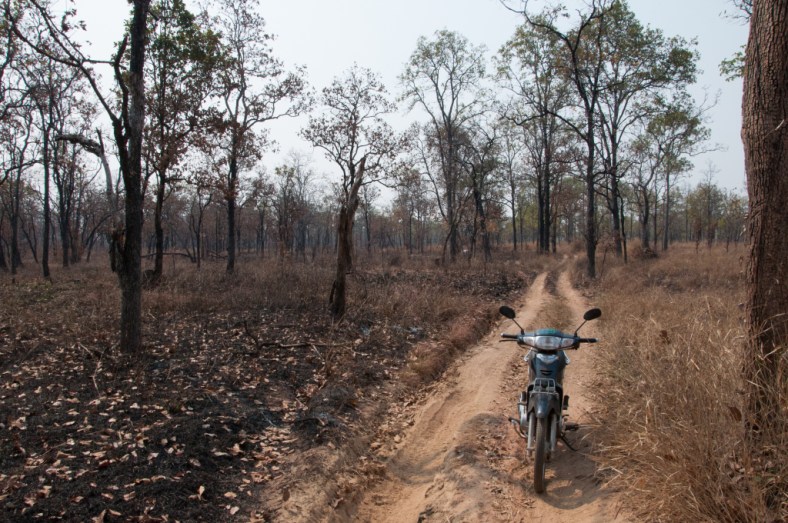
After some time spent in Phnom Penh meeting people and taking Khmer lessons, I moved on to the town of Preah Vihear. WCS bases their operations in the “northern plains” from here and I stayed in their ‘technical-advisor house’. From here I met more of the WCS teams working in the area and made a number of trips into the field. Some of these were directly to sites related to my prospective research, but on others I took the opportunity to join trips that weren’t directly related. These were often exciting camping trips to very remote areas and gave me the chance to see what was going on in the area and to spend some quality time with the WCS team. I felt very privileged to have such access to these spectacular forests, which are not visited by many foreigners, even if it wasn’t without risks! (see the photo below with the knowledge that nobody was hurt)
This isn’t a travel blog so I wont overload you with details on where I went and what I ate. If you are interested in seeing a bit more of Cambodia and the places I went I’ll be working on some short ‘video diaries’. I’ve already made 2 of these (let me know what you think!) so check them out and watch this space.
Now that I’m back in the UK I will be working hard to plan and prepare my next trip. I will be looking for some Cambodian students to join me as field assistants and developing the research instruments that I will take to collect data. This trip may be sooner than expected, in just a few months, so there isn’t much time! In addition I’m helping to organise a summit on Conservation Optimism which is going to be fantastic and a very important event for conservation – do join if you have an interest in conservation.