
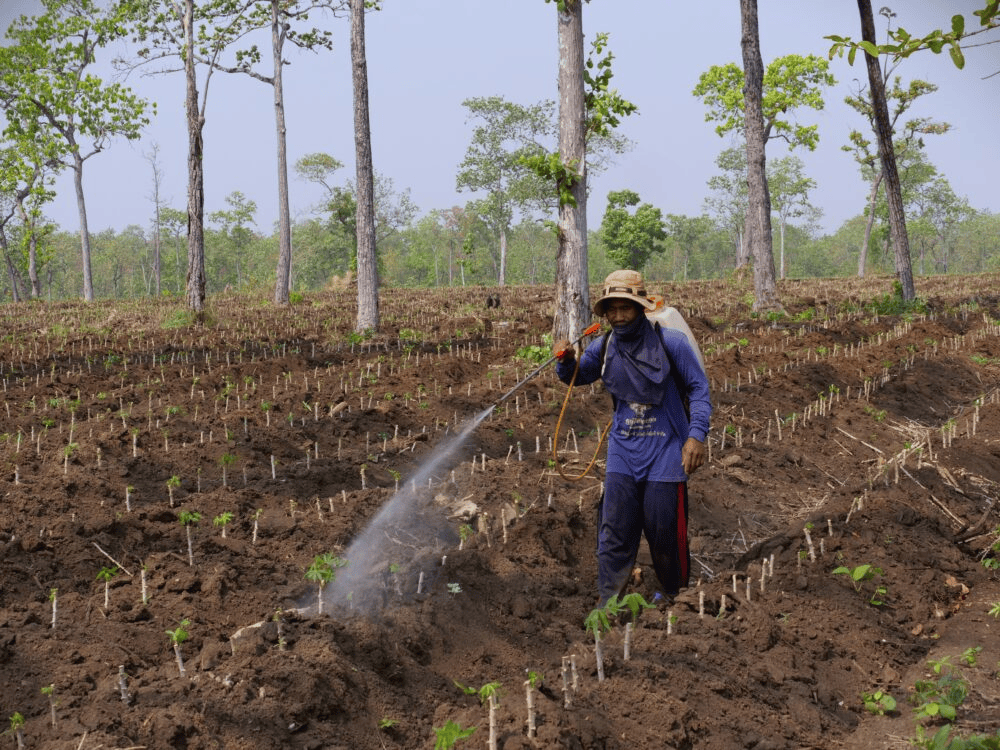
The Cambodian Journalists Alliance has produced a detailed write-up of the challenges faced by our Ibis Rice program in Preah Vihear province, Cambodia, drawing on research published last year. I recommend this great read!
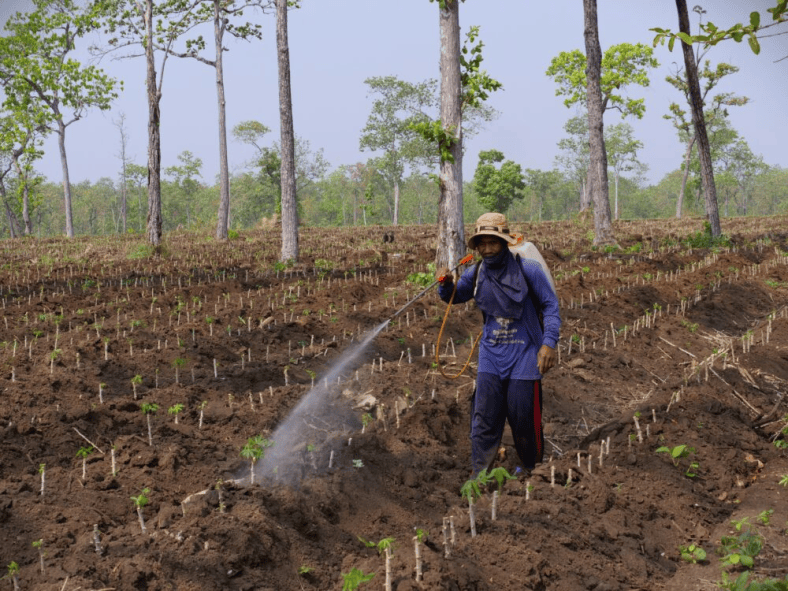
The Cambodian Journalists Alliance has produced a detailed write-up of the challenges faced by our Ibis Rice program in Preah Vihear province, Cambodia, drawing on research published last year. I recommend this great read!
I was quoted by Mongabay in this article on a study showing the impact of COVID on wildlife hunting in South-East Asia. Some excerpts are quoted below:
“In Cambodia, hunting is very widespread,” says conservation social scientist Emiel de Lange of the Wildlife Conservation Society, Cambodia. “This comes from the long history people have where other food can be scarce and where wildlife is an important source of food and especially meat.”
Many communities in the region hunt incidentally, killing wild animals like deer, mongoose, squirrels, rabbits, bush pigs or muntjacs when they encounter them in the forest, or setting traps around their fields to protect crops. A smaller number of hunters go into forests targeting wildlife like pangolins, bears or porcupines that are exported for their purported medicinal values. “But it’s not as common as incidental hunting,” says de Lange, who was not involved in the recent study.
In Cambodia, which did not report any community transmissions until about a year into the pandemic due to strict lockdowns, nearly a fifth (17%) of the respondents noted that wildlife traders, who otherwise frequented rural communities to supply markets in Phnom Penh, a hub of the wildlife trade due to its connectivity, stopped coming to buy their catch. “Access to markets became a lot more difficult,” says de Lange, who observed similar trends in the country with anecdotal evidence. A fifth of the surveyed hunters also mentioned that while the prices of goods had generally risen, wildlife prices had fallen during the pandemic.
Although the pandemic has now eased in these countries, the economic instability linked to increased hunting has continued. “The economy still has not returned to where it was previously,” says de Lange of post-pandemic Cambodia, adding that many of those who were previously employed haven’t yet been able to return to their jobs or find new ones.
Instead of enforcing various laws on hunting, Davis and de Lange suggest governments work with hunting communities to understand how best they can help them to find other sustainable livelihoods.
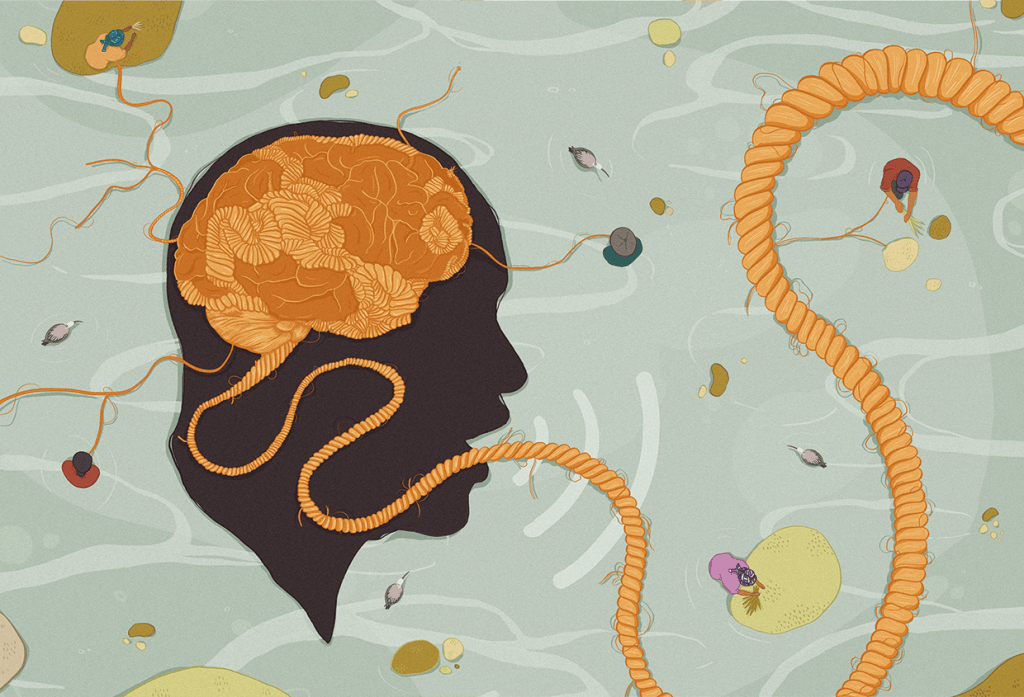
A beautifully illustrated article about my PhD research was published in the magazine Current Conservation. Check it out!
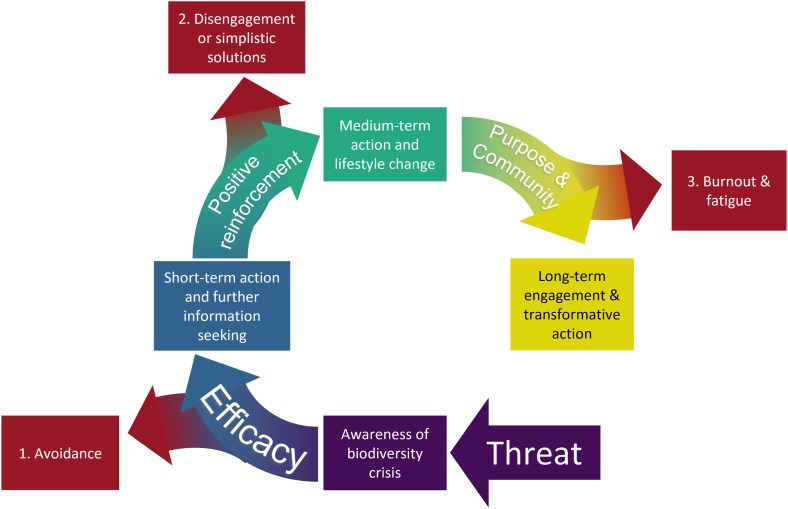
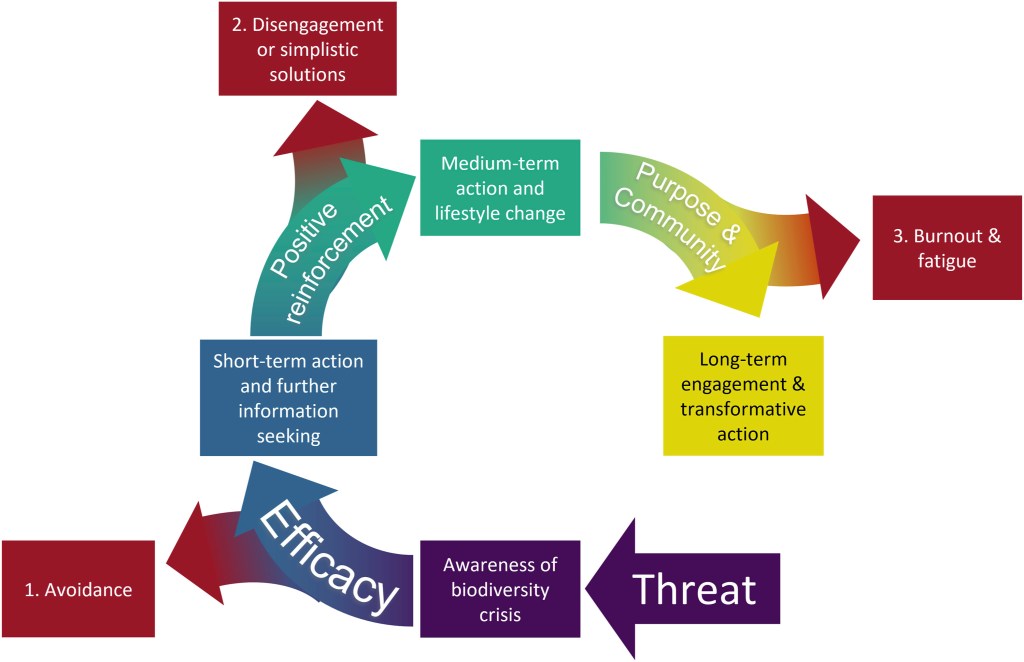
de Lange E, Sharkey W, Castelló y Tickell S, Migné J, Underhill R, Milner-Gulland EJ. Communicating the Biodiversity Crisis: From “Warnings” to Positive Engagement. Tropical Conservation Science. 2022;15. doi:10.1177/19400829221134893
A policy brief based on this paper is available here.
Abstract
Background: Effective communication can play a vital role in societal transformations towards sustainability and biodiversity restoration. However, the complexity and long-term nature of environmental change presents a communication challenge. If not carefully navigated, messages around environmental degradation can lead to audience disengagement and issue fatigue, at a time when motivation, engagement and positive action is required. Methods: In this Conservation in Action piece, we describe the principles of positive communication, which are being adopted by a growing movement of conservation organizations. We support this approach by reviewing evidence on the role of emotions in decision-making from diverse fields such as psychology and communications, paying particularly close attention to the experiences of climate change communicators. Results: Positive emotional experiences, including feelings of hope, collective efficacy, and the warm glow that follows actions aligned with intrinsic values, can play an essential role in sustaining actions that contribute to transformative change. While negative emotions prime specific action tendencies, positive emotions enable creativity, cooperation, and resilience, which are all essential for overcoming the challenging nature of acting on the biodiversity crisis. Conclusions: Communications from conservation researchers and practitioners need to reflect the reality of the biodiversity crisis. While some communications may seek to motivate action through warnings and threats, messages that trigger positive emotions in audiences can help inspire long-term engagement and action. We suggest that this positive communication approach is underutilized. Implications: We present a guide to help those working in conservation convey their messages in ways that are empowering and positive. As the biodiversity crisis intensifies, it is critical that conservation professionals continue to imagine and develop pathways to a better future and communicate with others in society in a way that supports transformative change towards this future.
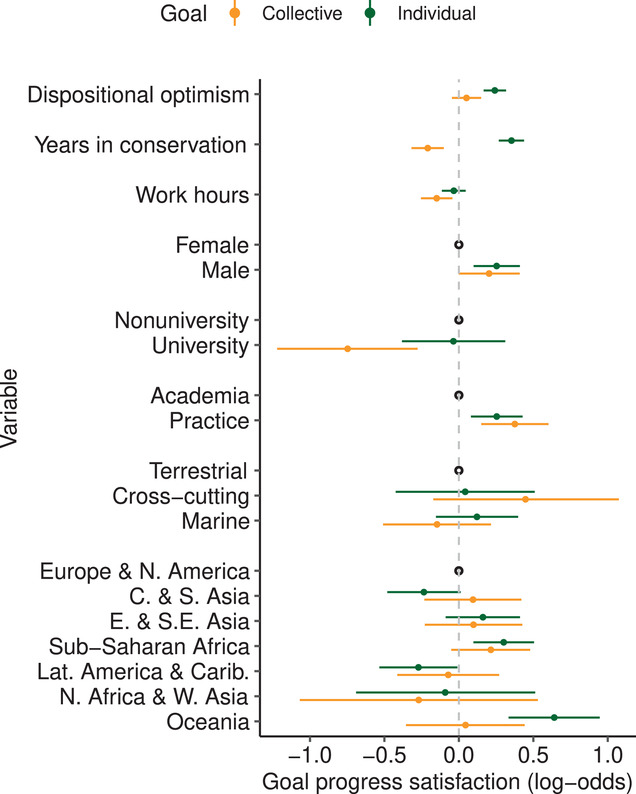
Pienkowski, T., Keane, A., Castelló y Tickell, S., Hazenbosch, M., Arlidge, W. N. S., Baranyi, G., Brittain, S., de Lange, E., Khanyari, M., Papworth, S., & Milner-Gulland, E. J. (2022). Balancing making a difference with making a living in the conservation sector. Conservation Biology. 36, e13846. https://doi.org/10.1111/cobi.13846
Abstract
Goals play important roles in people’s lives because they focus attention, mobilize effort, and sustain motivation. Understanding conservationists’ satisfaction with goal progress may provide insights into real-world environmental trends and flag risks to their well-being and motivation. We asked 2694 conservationists working globally how satisfied they were with progress toward goals important to them. We then explored how this satisfaction varied among groups, including demographic and occupational. Finally, we looked at respondents’ experiences associated with goal-progress satisfaction. Many (94.0%) indicated that making a meaningful contribution to conservation was an important goal for them, and over half were satisfied or very satisfied in this area (52.5%). However, respondents were generally dissatisfied with progress on collective conservation goals (e.g., stopping species loss). Some groups were more likely to report dissatisfaction than others. For instance, those in conservation for longer tended to be less satisfied with collective goal progress (log odds –0.21, 95% credibility interval [CI] –0.32 to –0.10), but practitioners reported greater satisfaction (log odds 0.38, 95% CI 0.15–0.60). Likewise, those who were more optimistic in life (log odds 0.24, 95% CI 0.17–0.32), male (log odds 0.25, 95% CI 0.10–0.41), and working in conservation practice (log odds 0.25, 95% CI 0.08–0.43) reported greater satisfaction with individual goal progress. Free-text responses suggested widespread dissatisfaction with livelihood goals, particularly related to job security and adequate compensation. Although contributing to conservation appeared to be a source of satisfaction, slow goal progress in other areas––particularly around making a living––looked to be a source of distress and demotivation. Employers, funders, professional societies, and others should consider ways to help those in the sector make a difference while making a satisfactory living by, for example, prioritizing conservationists′ well-being when allocating funding. This support could include avoiding exploitative practices, fostering supportive work environments, and celebrating positive outcomes.
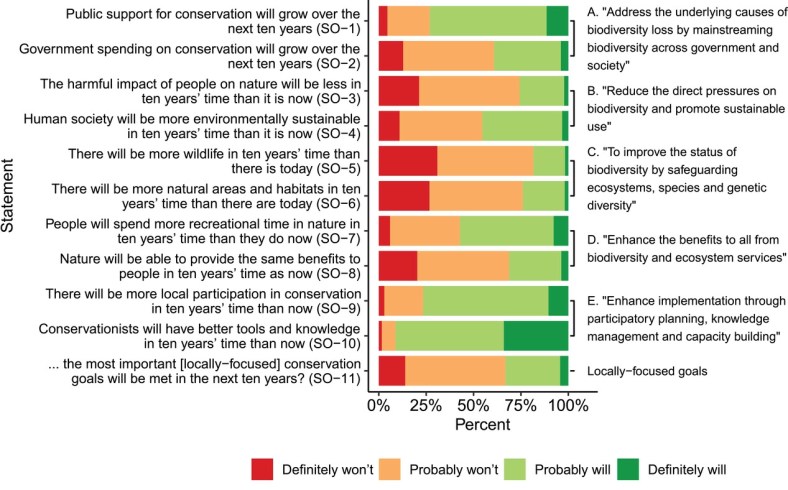

In the face of unprecedented biodiversity loss, the belief that conservation goals can be met could play an important role in ensuring they are fulfilled. We asked conservationists how optimistic they felt about key biodiversity outcomes over the next 10 years; 2341 people familiar with conservation in 144 countries responded. Respondents expressed optimism that enabling conditions for conservation would improve but felt pressures would continue, and the state of biodiversity was unlikely to get better. Respondents with greater general optimism about life, at early-career stages, and working in practice and policy (compared to academia) reported higher conservation optimism. But most of our biodiversity and conservation status indicators were not associated with conservation optimism. Unbounded optimism without appropriate action would be misguided in the face of growing threats to biodiversity. However, supporting those struggling to see the light at the end of the tunnel could help sustain efforts to overcome these threats.
Pienkowski, T., Keane, A., de Lange, E., Khanyari, M., Arlidge, W. N. S., Baranyi, G., Brittain, S., Castelló y Tickell, S., Hazenbosch, M., Papworth, S., & Milner-Gulland, E. J.Personal traits predict conservationists’ optimism about outcomes for nature. Conservation Letters. 2022; 00 e12873. https://doi.org/10.1111/conl.12873
It was my pleasure to participate in a panel discussion on Innovations in Behavioral Science for Conservation at the International Congress for Conservation Biology (ICCB) last night, December 16th 2021.
The panel was organised by Dr Erik Thulin, the behavioral science lead at the Rare’s Center for Behavior and Environment, and other participants were Dr Ganga Shreedhar (LSE), Dr Philipe Bujold (Rare), and Dr Kira Sullivan-Wiley. We had a really active discussion with our audience covering many issues at the cutting edge of conservation behaviour change.
The first question was about the ethics of behaviour change. We discussed the colonial and very coercive history of conservation, and how behavioural science is an opportunity for bring neglected perspectives into the design of programmes through co-production. In the end, I believe behaviour change can only be successful in the long-term when it expands autonomy and opportunities to make good decisions.
Another audience member asked about the role of ‘key influencers’ and how these can be identified in network studies or using cheaper methods. In my response, I briefly summarised some of the other ways that key influencers can be identified (i.e. sampled surveys, key informants, using proxy indicators – but these are very context specific). We then highlighted that key influencers are crucial for driving widespread change, but are often risk-averse and have social positions to maintain. This means they rarely are at the forefront of new innovations. Initially, it might be more fruitful to build relations amongst others who are willing to take risks and empower them to influence others.
Are all behaviour changes gradual and dependent on the painstaking work of building and changing social norms? Dr Philipe Bujold pointed out some of the ways in which providing simple decision tools or changing the context in which decisions are made can have big and immediate impacts. For example, they provided fisherfolk with a tool to identify crabs that are too small to catch. Given that the fisherman were already interested in maintaining the sustainability of their crab stocks, the tool was quickly adopted and ensured the crab population could keep reproducing.
A recording of the discussion may be available soon, and you can view my recorded presentation at the top of this page.
I was priviliged to speak at the 2021 Science-Technology-Society Seminar, hosted by the Department of Biological Sciences at the University of Santo Tomas in Manila, Philippines. I spoke about the role of applied social science in supporting efforts to conserve biodiversity and One Health.
You can watch the video at the link below. My talk starts at 44:00
https://www.facebook.com/ustgalingscience/videos/926237931661131
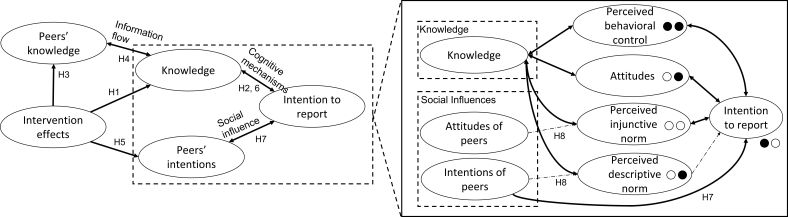
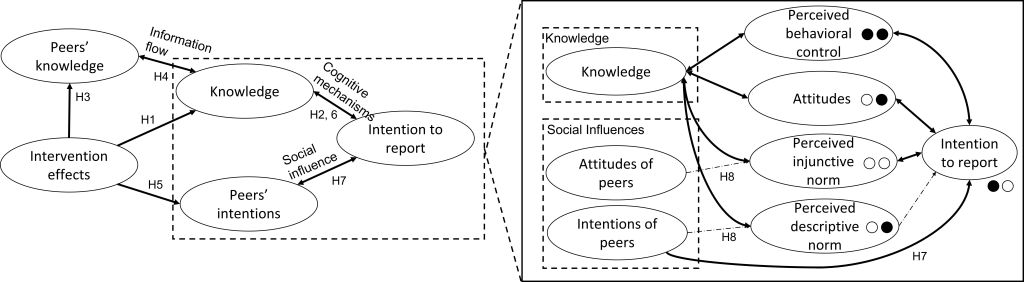
Social networks are critical to the success of behavioral interventions in conservation because network processes such as information flows and social influence can enable behavior change to spread beyond a targeted group. We investigated these mechanisms in the context of a social marketing campaign to promote a wildlife poisoning hotline in Cambodia. With questionnaire surveys we measured a social network and knowledge and constructs from the theory of planned behavior at 3 points over 6 months. The intervention initially targeted ∼11% (of 365) of the village, but after 6 months ∼40% of the population was knowledgeable about the campaign. The likelihood of being knowledgeable nearly doubled with each additional knowledgeable household member. In the short term, there was also a modest, but widespread improvement in proconservation behavioral intentions, but this did not persist after 6 months. Estimates from stochastic actor-oriented models suggested that the influences of social peers, rather than knowledge, were driving changes in intention and contributed to the failure to change behavioral intention in the long term, despite lasting changes in attitudes and perceived norms. Our results point to the importance of accounting for the interaction between networks and behavior when designing conservation interventions.
https://conbio.onlinelibrary.wiley.com/doi/full/10.1111/cobi.13833
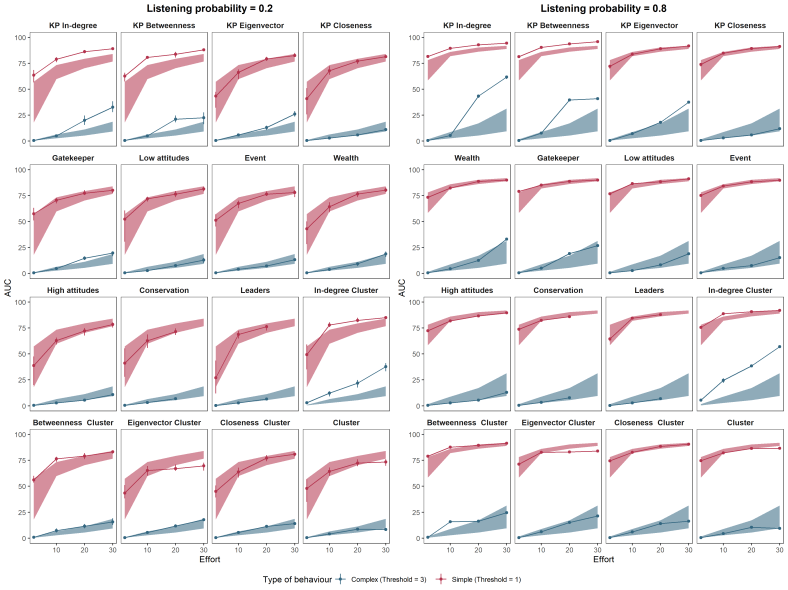
Conservationists can use social network analysis to improve targeting for behaviour-change interventions, selecting individuals to target who will go on to inform or influence others. However, collecting sociometric data is expensive. Using empirical data from a case study in Cambodia and simulations we examine the conditions under which collecting this data is cost-effective. Our results show that targeting interventions using sociometric data can lead to greater dissemination of information and adoption of new behaviours. However, these approaches are not cost-effective for small interventions implemented in only a few communities, and it is an order of magnitude cheaper to achieve the same results by simply targeting more individuals in each community at random. For interventions across multiple communities, network data from one community could inform rules-of-thumb that can be applied to boost the effectiveness of interventions. In rural Cambodia, this approach is worthwhile if it can inform interventions covering at least 21 villages. Our findings provide a framework for understanding how insights from network sciences, such as targeting clusters of individuals for interventions that aim to change behaviour, can make a practical contribution to conservation.
https://www.sciencedirect.com/science/article/abs/pii/S000632072100344X

